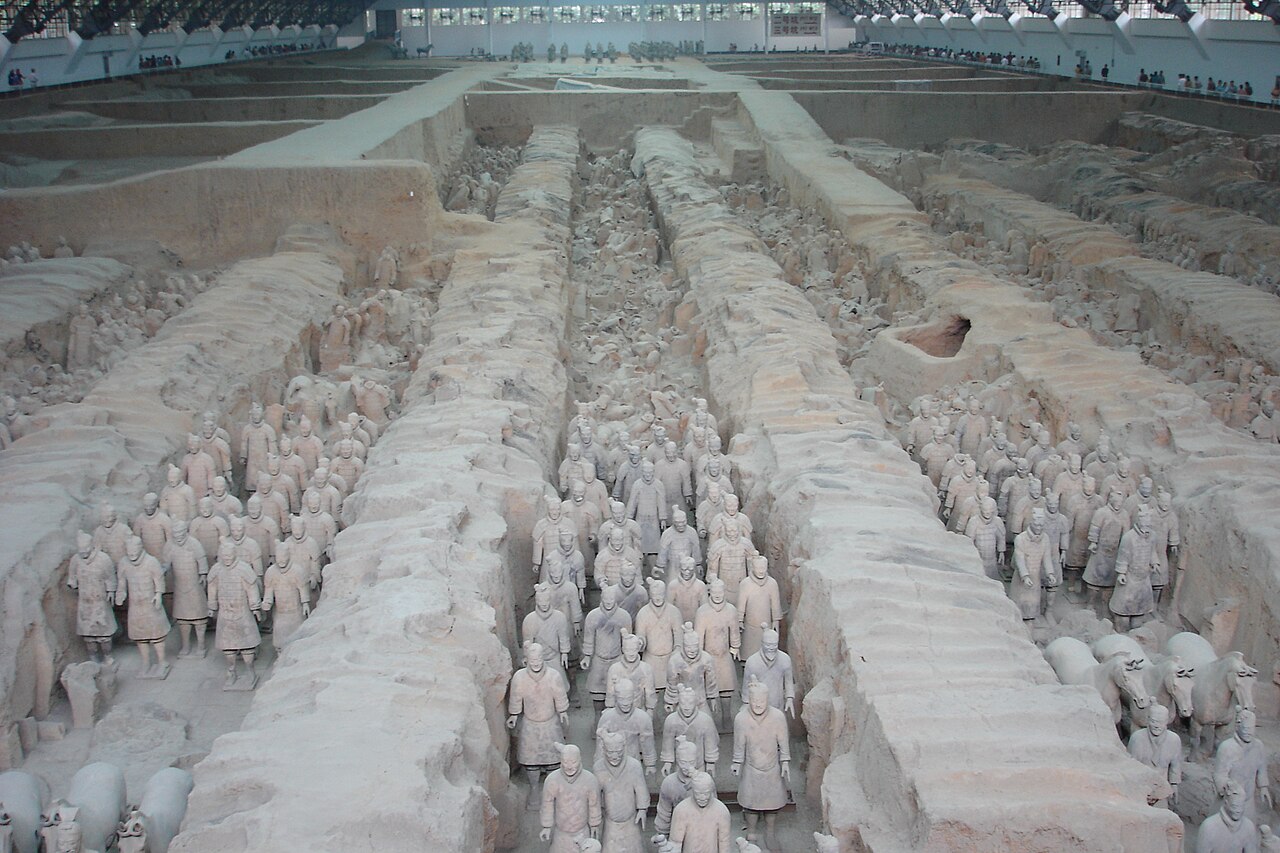

An army within a larger landscape
The familiar view is a hall of earthen figures, standing in corridors that recede into the distance. It is tempting to treat that scene as a complete monument. The warriors are instead one part of the burial complex of Qin Shi Huang, the ruler associated with China’s first unified empire in the third century BCE.
UNESCO describes a much wider archaeological landscape containing the burial mound, accompanying pits and other remains. That scale changes the question. Rather than asking only how so many soldiers were made, ask what kind of world was being assembled around the emperor’s burial.
What a formation can tell you
The arrangement matters as much as the individual faces. Figures, horses and weapons provide evidence about military organisation and the people and skills needed to represent it. In a museum hall, take a moment to look along the corridors before concentrating on a single warrior.
Then look at clothing, posture and equipment. Differences can help you recognise roles, but they do not supply the personal biography of a named soldier. A lifelike face is not, by itself, evidence that an identifiable person sat for a portrait.
A discovery followed by patient work
The discovery in 1974 opened a new chapter in the study of the mausoleum. The standing ranks visitors see are not a simple scene uncovered intact. Excavation, conservation, study and reassembly are part of how the collection has become visible.
Notice the contrast between complete figures, fragments and areas still being investigated. That contrast is not a defect in the display. It shows that archaeology proceeds through evidence and preservation, with questions remaining open as new work is undertaken.
An afterlife expressed through skilled labour
The scale of the project invites stories about the emperor’s power, yet the figures also direct attention to their makers. Producing, arranging and burying so many objects required material, coordination and skilled work. Each visible detail sits within that larger undertaking.
Avoid imagining the army as a single isolated artwork commissioned in the modern sense. Its setting, construction and relationship to the tomb are part of its meaning. The objects make most sense when you keep the burial landscape in view.
How to look during your visit
Choose one broad question and one small detail. How is the force arranged? How does a sleeve, hand or hairstyle differ between figures? A few minutes of looking can make the visit more memorable than trying to memorise every number.
For admission and the route through the wider museum, use the separate visiting guide. The historical story and the practical visit support each other, but the current ticket arrangements are not part of the ancient evidence.